Uncategorized

sudan: greater horn of africa food insecurity and health crisis, strategic response plan (august 2026–january 2027)

Sudan: Greater Horn of Africa Food Insecurity and Health Crisis, Strategic Response Plan (August 2026–January 2027)

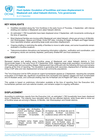
Country: Sudan Source: World Health Organization Please refer to the attached file. Overview The Greater Horn of Africa (GHoA) is facing a rapidly deteriorating humanitarian and public health crisis driven by conflict, displacement, recurrent climate shocks, disease outbreaks, economic instability and severe food insecurity. These overlapping shocks are disrupting livelihoods and essential health services and increasing the risk of preventable illness and death. Across Djibouti, Ethiopia, Kenya, Somalia, South Sudan and Sudan, more than 37.8 million people are experiencing or projected to experience acute food insecurity. Over 4.9 million children are projected to suffer acute malnutrition, including more than 1.5 million children requiring treatment for Severe Acute Malnutrition (SAM). Rising acute malnutrition is occurring alongside recurrent outbreaks of measles, cholera, malaria, dengue and other epidemic-prone diseases. Children under five, pregnant and lactating women, displaced populations and communities with limited access to essential services are among those at greatest risk. WHO’s Strategic Response Plan for August 2026–January 2027 prioritizes emergency coordination and leadership, surveillance and early warning, community protection, safe and scalable life-saving health and nutrition services, and strategic advocacy and resource mobilization. WHO is supporting Member States and partners to deliver an integrated, evidence-based response in high-risk settings to prevent avoidable mortality, maintain essential health services and strengthen the resilience of vulnerable populations and health systems. Related documents Greater Horn of Africa Food Insecurity and Health Crisis, Situation Report No. 1 (April–June 2026)
Sudan: Greater Horn of Africa Food Insecurity and Health Crisis, Strategic Response Plan (August 2026–January 2027) Read More »

yemen joint monitoring report: bimonthly update on food and nutrition security crisis risks july 2026 report #16

Yemen Joint Monitoring Report: Bimonthly Update on Food and Nutrition Security Crisis Risks July 2026 – Report #16

Country: Yemen Sources: ACAPS, Food and Agriculture Organization of the United Nations, UN Children’s Fund, World Bank, World Food Programme, World Health Organization Please refer to the attached file. KEY MESSAGES Food insecurity continued to deteriorate in June 2026, with inadequate food consumption increasing to 64% and severe food deprivation to 36% nationwide. This deterioration has been driven primarily by rising food and fuel prices, reduced purchasing power, and weakening livelihoods rather than a nationwide food shortage. Household coping capacity also continued to erode, particularly in Ansar Allah (AA)-controlled areas, amid prolonged gaps in humanitarian assistance resulting from the loss of humanitarian operational space and funding. In July 2026, the Joint Monitoring Report (JMR) recorded 23 critical and 453 heightened risk alerts, with the largest share generated by the proxy food imports indicator (one critical and 310 heightened), followed by fuel prices (20 critical and 84 heightened) and food prices (45 heightened). Food price pressures increased in July, with food price alerts more than doubling compared to May. The proxy food import indicator also began to deteriorate again as local food prices increased more than global prices, widening the gap between domestic and international prices. Fuel prices remained elevated in Government of Yemen (GoY)-controlled areas, while fuel imports remained below their longer-term average. Continued high fuel costs are likely to sustain pressure on transport, food prices, and essential services. Conflict and displacement risks increased in several governorates, with alerts concentrated around existing front lines and renewed tribal–AA clashes, particularly in Al Jawf. Regional tensions also continue to increase the risk of renewed escalation involving AA and Saudi Arabia, and increased frontline escalation between AA and GoY forces also increases the risk of renewed internal conflict. Maritime insecurity poses an increasing risk to Yemen’s food and fuel supply chains. While current AA threats have largely focused on Saudi-linked shipping and do not necessarily imply the disruption of food and fuel vessels bound for Yemen, a broader deterioration in security around the Bab Al Mandab Strait could further increase freight, insurance, and security costs and disrupt shipping. Climate risks such as El Niño are expected to compound existing food-related vulnerabilities, with below-average rainfall and above-average temperatures increasing the likelihood of drought-related impacts on agriculture and livestock during the Kharif season. Because a strong El Niño could also depress production in global food-exporting regions, international price hikes would severely strain Yemen, which imports 85% of its food needs. As a result, even moderate increases in international food prices could reduce household purchasing power and food access. Overall, food security risks are expected to remain elevated over the coming months, as worsening economic access, depleted coping capacity, reduced humanitarian assistance and operational space, conflict, maritime insecurity, and climate risks interact in a context where more than half of the population is already projected to face Crisis (IPC Phase 3) or above levels of food insecurity.

Yemen Joint Monitoring Report: Bimonthly Update on Food and Nutrition Security Crisis Risks July 2026 – Report #16 Read More »

syria: minimum expenditure basket 2026 revision

Syria: Minimum Expenditure Basket 2026 Revision

Country: Syrian Arab Republic Source: UN Office for the Coordination of Humanitarian Affairs Please refer to the attached file. Executive Summary This report presents the findings and methodology of the Minimum Expenditure Basket (MEB) review conducted in Syria and completed on 10 July 2026. To ensure that the revised MEB reflects both normative standards for essential needs and the prevailing economic realities faced by households in Syria, a hybrid methodology was employed. The approach combines rights-based humanitarian standards with evidence from household expenditure patterns and market conditions. The 2026 MEB analysis relied primarily on data from the WFP 2025 Food Security Assessment (FSA), with findings triangulated against the 2025 Multi-Sector Needs Assessment (MSNA), and validated against Sphere Standards and qualitative inputs from relevant sectors.

Syria: Minimum Expenditure Basket 2026 Revision Read More »

world: global public health situation analysis el nino 2026

World: Global Public Health Situation Analysis – El Nino 2026

Country: World Source: World Health Organization Please refer to the attached file. This Global Public Health Situation Analysis summarizes the evolving health risks associated with El Niño 2026. It aims to support country- and region-specific risk assessment, preparedness and anticipatory action, with particular attention to vulnerable populations and health-system readiness.

World: Global Public Health Situation Analysis – El Nino 2026 Read More »

nepal rasuwa flood situation report no. 6

Nepal Rasuwa Flood Situation Report No. 6

Country: Nepal Sources: UN Office for the Coordination of Humanitarian Affairs, UN Resident Coordinator in Nepal Please refer to the attached file. SITUATION OVERVIEW More than a week after the 26 August flood, search and rescue has largely given way to relief operations. NDRRMA reports 1,259 deaths, 5,083 people out of contact and 12,038 rescued. Access remains the principal constraint, with damaged roads and bridges slowing the movement of relief supplies into upper Rasuwa, and several locations reachable only on foot. Alongside the Government of Nepal, the Humanitarian Country Team launched a Flash Appeal in support of the Government-led response. The appeal seeks US$49.6 million to provide life-saving assistance to 84,270 people (19,284 households) in 17 municipalities across six districts: Rasuwa, Nuwakot, Dhading, Chitwan, Gorkha and Tanahu. All identified affected people are targeted, of whom nearly 40 per cent are children. Requirements cover ten sectors through the end of 2026, with roughly three quarters concentrated in five: food security (US$7.94 million), WASH (US$7.9 million), health (US$7.6 million), logistics and emergency telecommunications (US$7.33 million) and shelter (US$7.1 million). The appeal complements the Government’s Official Disaster Relief Appeal of 27 August and the NDRRMA-led operation. It is a time-bound humanitarian response, not a recovery plan; recovery and reconstruction needs will be addressed through the Post-Disaster Needs Assessment. To sustain the immediate response ahead of the appeal, the CERF allocation has been recalibrated to US$2.5 million, prioritizing life-saving assistance in the worst-affected districts. The Logistics Cluster has been activated to support partners with logistics coordination, information management and common services, working with the Ministry of Home Affairs to identify and address transport bottlenecks. With WFP’s support, a coordination base for the UN and partners is being established in Bidur, Nuwakot, providing shared operational and office space for agencies and cluster coordinators working closer to affected communities. HUMANITARIAN NEEDS AND RESPONSE Food and non-food items are in sufficient supply in the market areas in Bidur – Nuwakot. Relief supplies continue to build up in Nuwakot, as access challenges hinder the delivery of assistance to many of the most severely affected communities in Rasuwa. Protection remains a key concern, as women, men, and children continue to share common spaces in displacement centres, raising potential protection risks and limiting privacy for vulnerable groups. Psychological counselling and social and behaviour change (SBC) interventions on personal and menstrual hygiene are needed. Additional priorities include addressing WASH needs, improving displacement site management and tracking, establishing safe spaces for children, and providing specialized nutritious food to pregnant and breastfeeding mothers and children under five.

Nepal Rasuwa Flood Situation Report No. 6 Read More »

nepal: rasuwa flood situation report no 6 (as of 5 september 2026)

Nepal: Rasuwa Flood Situation Report No-6 (As of 5 September 2026)

Country: Nepal Sources: UN Office for the Coordination of Humanitarian Affairs, UN Resident Coordinator in Nepal Please refer to the attached file. So far, reports indicate that the Rasuwa floods have claimed 1,259 lives, with 5,083 people still out of contact and 12,038 rescued (NDRRMA, 3 September, 19:00). 3,844 displaced people are living in 34 displacement sites in Nuwakot, Rasuwa, Dhading, and Kathmandu. IOM is supporting the Government’s response through the Displacement Tracking Matrix (DTM) and estimates 4,288 households were affected by the floods, of which 2,886 households were displaced. Access continues to be a constraint, with road blockages limiting the transportation of relief supplies to affected communities. Activated on 27 April, the Global Logistics Cluster in Nepal is supporting humanitarian partners through coordination, information management, GIS mapping, and work with the Ministry of Home Affairs to prevent logistics bottlenecks.

Nepal: Rasuwa Flood Situation Report No-6 (As of 5 September 2026) Read More »

sudan protection cluster alert: blue nile escalating hostilities and humanitarian access constraints

Sudan Protection Cluster Alert: Blue Nile – Escalating Hostilities and Humanitarian Access Constraints

Country: Sudan Source: Protection Cluster Please refer to the attached file. Escalating hostilities in Blue Nile are driving new displacement, increasing protection risks and further constraining humanitarian access. More than 23,000 people have reportedly been displaced from Geissan and Al Kurmuk localities since 11 August 2026, while insecurity and movement restrictions are disrupting humanitarian operations and access to essential services. The Protection Cluster is concerned that continued hostilities, possible further population movements, explosive ordnance contamination, seasonal flooding and existing pressure on services could further heighten risks for displaced people, refugees and host communities, particularly women, children, older people and persons with specific needs. The alert reiterates its call on all parties to the conflict to protect civilians and civilian infrastructure, facilitate safe, rapid and unimpeded humanitarian access and civilian movement, and respect their obligations under International Humanitarian Law. It also calls on humanitarian actors and humanitarian leadership to sustain critical services, strengthen protection monitoring and preparedness, and maintain contingency arrangements for any further deterioration in the security and access environment.

Sudan Protection Cluster Alert: Blue Nile – Escalating Hostilities and Humanitarian Access Constraints Read More »

yemen: flash update: escalation of hostilities and mass displacement in maqbanah and jabal habashi districts, ta'iz governorate (as of 4 september)

Yemen: Flash Update: Escalation of hostilities and mass displacement in Maqbanah and Jabal Habashi districts, Ta’iz governorate (As of 4 September)

Country: Yemen Source: UN Office for the Coordination of Humanitarian Affairs Please refer to the attached file. KEY HIGHLIGHTS Hostilities escalated along the Ta’iz frontlines in the early hours of Thursday, 3 September, with intense shelling and clashes in Maqbanah and Jabal Habashi districts. An estimated 1,790 households have been displaced since 3 September, with movements continuing at the time of reporting. Most displaced families are moving within Maqbanah and Jabal Habashi; others are arriving in Al Ma’afer, Ash Shamayatayn, Mawza and Dubab. Entire IDP sites, including Al-Hajab, Al-Rajehi and Hajjat Gabeh, have reportedly emptied, generating large-scale secondary displacement. Ongoing shelling is restricting the ability of families to move to safer areas, and some households remain stranded in frontline locations. Telecommunications disruptions are hampering information collection, verification and coordination, and emergency stocks are severely depleted, particularly Shelter/NFI and food assistance.

Yemen: Flash Update: Escalation of hostilities and mass displacement in Maqbanah and Jabal Habashi districts, Ta’iz governorate (As of 4 September) Read More »

el salvador: latinoamérica y el caribe resumen de situación semanal al 4 de septiembre 2026

El Salvador: Latinoamérica y El Caribe Resumen de Situación Semanal al 4 de septiembre 2026

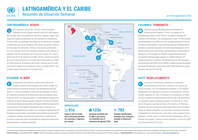
Countries: El Salvador, Colombia, Ecuador, Guatemala, Haiti, Honduras Source: UN Office for the Coordination of Humanitarian Affairs Please refer to the attached Infographic. CIFRAS CLAVE 91K hogares del Corredor Seco enfrentan pérdida de cosechas e ingresos por sequía 123K personas asistidas por la ONU y sus socios en Colombia tras el terremoto de agosto 2026 702 familias desplazadas asistidas tras violencia armada en Kenscoff, Haití CENTROAMÉRICA: SEQUÍA Una evaluación de Oxfam y Acción contra el Hambre realizada en julio y agosto detectó más de 91.000 hogares del Corredor Seco con pérdida de cosechas, ingresos y agua. Casi todos los hogares productores de maíz perdieron la cosecha de Primera 2026, con pérdidas casi totales en el oriente de El Salvador y Guatemala y el sur de Honduras. Dos tercios conservan reservas de maíz para tres semanas o menos, y los precios aumentaron 67% en Honduras y 32% en El Salvador respecto al año anterior. El Salvador informó que agosto fue el más seco desde 1971, tras la alerta roja del 25 de agosto por El Niño. OCHA coordina proyectos de Acción Anticipatoria en el Corredor Seco financiados por CERF, el Fondo Global de Emergencia de la ONU, mientras que el Fondo Humanitario Regional para América Latina y el Caribe (RHPF LAC) también apoya respuesta en el Corredor Seco. ECUADOR: EL NIÑO El organismo de monitoreo oceánico-atmosférico de Ecuador confirmó el 28 de agosto que El Niño cumplió los criterios técnicos de presencia oficial, con temperaturas del mar hasta 4 °C sobre el promedio y niveles del mar elevados. El Centro de Predicción Climática de la NOAA prevé que se fortalezca hasta finales de 2026. Los impactos varían: la costa registra inundaciones aisladas y la sierra enfrenta sequía y riesgo de incendios forestales. La Secretaría Nacional de Gestión de Riesgos (SNGR) declaró alerta roja nacional el 29 de agosto, designación que no equivale a un estado de emergencia pero ordena a los Comités de Operaciones de Emergencia provinciales y cantonales activar planes de preparación y respuesta, incluidas evacuaciones preventivas, movilización de recursos y protección para comunidades en riesgo de inundaciones, deslizamientos e incendios forestales. COLOMBIA: TERREMOTO Colombia reporta 466.606 personas afectadas por el terremoto de magnitud 7,4 del 10 de agosto en 16 departamentos, frente a 282.709 el 21 de agosto, incluidas 331 muertes, 4.519 heridos y 136 desaparecidos. Unas 73.378 viviendas son inhabitables y los daños en 4.287 escuelas afectaron a más de un millón de estudiantes. Chocó enfrenta además enfrentamientos armados y explosivos lanzados con drones que desplazaron a 912 personas de la zona rural de Sipí, mientras lluvias y deslizamientos afectaron a 2.814 hogares en Quibdó, la capital departamental. Los aportes internacionales superan los US$40 millones y 29 organizaciones han asistido a 123.000 personas en 49 municipios. Una evaluación del PNUD con la UNGRD, entidad nacional de gestión del riesgo de desastres, estima unos US$13.400 millones en daños directos, cerca de 2,3% del PIB. HAITÍ: DESPLAZAMIENTO Los socios humanitarios ampliaron la respuesta multisectorial en Kenscoff, comuna en las alturas de Puerto Príncipe, y al 2 de septiembre asistieron a 702 hogares desplazados con albergue y artículos no alimentarios. Clínicas móviles operaron en Lotin, Thomassin 25 y Kenscoff, y el PMA iniciará la asistencia alimentaria la semana del 6 de septiembre. La respuesta sigue al ataque de grupos armados de la noche del 23 de agosto, que dejó al menos 47 muertos y 22 heridos, incluidas más de 20 personas ejecutadas dentro de una iglesia donde se habían refugiado. Los atacantes quemaron viviendas y secuestraron a 50 personas; seis niños y siete mujeres fueron liberados. La OIM reporta 4.238 personas desplazadas, 80% en familias de acogida. Violencia similar desplazó a cerca de 6.000 personas de Kenscoff en julio.

El Salvador: Latinoamérica y El Caribe Resumen de Situación Semanal al 4 de septiembre 2026 Read More »

el salvador: latin america & the caribbean weekly situation update as of 4 september 2026

El Salvador: Latin America & The Caribbean Weekly Situation Update as of 4 September 2026

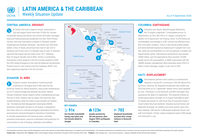
Countries: El Salvador, Colombia, Ecuador, Guatemala, Haiti, Honduras Source: UN Office for the Coordination of Humanitarian Affairs Please refer to the attached Infographic. KEY FIGURES 91K Dry Corridor households facing crop failure and lost income linked to drought 123K people assisted by UN and partners after August 2026 earthquake in Colombia 702 displaced households assisted after armed violence in Kenscoff, Haiti CENTRAL AMERICA: DROUGHT An Oxfam and Action Against Hunger assessment in July and August found more than 91,000 Dry Corridor households facing crop failure, lost income and water shortages. Nearly all maize-producing households lost their 2026 Primera harvest, with near-total failure in eastern El Salvador, eastern Guatemala and southern Honduras. Two-thirds now hold three weeks or less of maize, and prices have risen 67 per cent in Honduras and 32 per cent in El Salvador year-on-year. El Salvador reported that August was the driest since 1971, following their 25 August red alert over El Niño. OCHA is coordinating Anticipatory Action projects in the Dry Corridor backed by CERF, the UN’s Global Emergency Fund, with the Regional Humanitarian Pooled Fund for Latin America and the Caribbean (RHPF LAC) also supporting response in the Dry Corridor. ECUADOR: EL NIÑO Ecuador’s oceanic-atmospheric monitoring body confirmed on 28 August that El Niño had met the technical criteria for official presence, citing ocean temperatures up to 4°C above average and elevated sea levels. NOAA’s Climate Prediction Center expects further strengthening through the end of 2026. Impacts vary by region: the coast has seen isolated flooding, while the interior faces drought and wildfire risk. The National Risk Management Secretariat (SNGR) declared a nationwide red alert on 29 August, a designation that stops short of a national emergency declaration but directs provincial and cantonal Emergency Operations Committees to activate preparedness and response plans, including preventive evacuations, resource mobilization and protection for communities at risk of flooding, landslides and wildfires. COLOMBIA: EARTHQUAKE Colombia now reports 466,606 people affected by the 10 August magnitude 7.4 earthquake across 16 departments, up from 282,709 on 21 August, including 331 deaths, 4,519 injured and 136 missing. Some 73,378 homes are uninhabitable, and damage to 4,287 schools has affected more than one million students. Chocó is also facing armed clashes and drone-delivered explosives displacing 912 people from rural Sipí, while rain and landslides hit 2,814 households in Quibdó, the departmental capital. International contributions have passed US$40 million, and 29 organizations have assisted 123,000 people across 49 municipalities. A UNDP assessment with the UNGRD disaster management office estimates about US$13.4 billion in direct damage, roughly 2.3 per cent of GDP. HAITI: DISPLACEMENT Humanitarian partners have scaled up a multisectoral response in Kenscoff, a commune in the hills above Port-au-Prince, reaching 702 displaced households with shelter and non-food items as of 2 September. Mobile clinics have operated at Lotin, Thomassin 25 and Kenscoff, and WFP will begin food assistance the week of 6 September. The response follows an armed group attack overnight on 23 August that killed at least 47 people and injured 22, with more than 20 executed inside a church where they had sheltered. Attackers burned homes and abducted 50 people; six children and seven women have since been released. IOM reports 4,238 people displaced, 80 per cent with host families. Similar violence displaced nearly 6,000 people from Kenscoff in July.

El Salvador: Latin America & The Caribbean Weekly Situation Update as of 4 September 2026 Read More »