
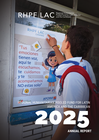

Please refer to the attached file.
In 2025, the Regional Humanitarian Pooled Fund for Latin America and the Caribbean (RHPF LAC) demonstrated its value as a flexible, strategic and locally driven financing mechanism in a year marked by escalating humanitarian needs across the region and a constrained funding environment. The Fund enabled timely, principled responses in Colombia and Haiti, where escalating conflict, violence, displacement and climate-related shocks pushed needs higher and constrained humanitarian access.
One of the Fund’s most significant achievements was its continued commitment to localization. In both Colombia and Haiti, local and national organizations played a central role in identifying priorities, shaping responses and delivering assistance. Through dedicated funding, partnerships, rapid response mechanisms and greater inclusion in governance structures, the Fund strengthened the leadership of local actors, including women-led organizations (WLOs) and community-based groups. This not only improved access to affected communities but also ensured that local knowledge informed humanitarian action, grounding it in the realities people face every day.
The Fund also demonstrated its adaptability. In Colombia, allocations supported innovative community-led protection and rapid response mechanisms in areas affected by conflict and disasters. In Haiti, the Fund balanced immediate life-saving assistance with investments in preparedness, helping vulnerable communities strengthen their resilience ahead of the hurricane season while responding to the impacts of armed violence and displacement. These efforts reinforced the Fund’s role in reaching people who are often beyond the reach of traditional humanitarian response.
At the same time, 2025 reminded us that humanitarian action must constantly evolve. The scale and complexity of needs in both countries continued to outpace available resources. Access constraints, insecurity, operational risks and limited funding remained persistent challenges. We demonstrated that strengthening local partnerships is not only a localization objective, it is essential for sustaining humanitarian access and delivering effective assistance in increasingly volatile environments. We also learned that preparedness, particularly in contexts exposed to both conflict and climate-related risks, must remain a core investment rather than an afterthought.
These achievements would not have been possible without the dedication of our humanitarian partners, local and national NGOs, WLOs, UN agencies, donors, advisory board members, community leaders and, most importantly, the affected communities themselves. Their commitment, expertise and willingness to work together continue to make the Fund a trusted mechanism for collective humanitarian action.
As we look toward 2026, the humanitarian outlook remains deeply concerning. Humanitarian needs across the region are expected to remain high, while competition for resources continues to mount. Against this backdrop, our vision is clear: to further strengthen the Fund as a responsive, accountable and locally led financing mechanism that delivers assistance where it is needed most. We will continue to prioritize localization, enhance support for frontline responders, invest in preparedness and risk-informed programming and broaden partnerships with donors and stakeholders who share our commitment to humanitarian action.
While the challenges ahead are considerable, so too is our collective determination. Together, we will continue to place affected people at the center of our efforts and ensure that the Fund remains a catalyst for timely, effective and principled humanitarian action across the region.