Uncategorized

statement by un resident and humanitarian coordinator for syria, a.i. marianne ward on the exams in as sweida governorate

Statement by UN Resident and Humanitarian Coordinator for Syria, a.i. Marianne Ward on the exams in As-Sweida Governorate

Country: Syrian Arab Republic Source: UN Office for the Coordination of Humanitarian Affairs Please refer to the attached files. Damascus, 29 August 2026 — The United Nations in Syria welcomes Presidential Decree No. 163 dated 19 August 2026 which grants students from As-Sweida Governorate an exceptional examination session for the Basic Education and General Secondary Education certificates. As these examinations are due to take place today, the United Nations is concerned by developments in As-Sweida Governorate, including reports that students are being prevented from reaching examination centres and face other restrictions of movement. The United Nations reaffirms that every child has the right to education and must be able to learn, develop, and sit for examinations in a safe, secure, and supportive environment. The United Nations calls on all relevant stakeholders to ensure that children with the support of their caregivers can exercise their right to education without pressure or disruption of movement.

Statement by UN Resident and Humanitarian Coordinator for Syria, a.i. Marianne Ward on the exams in As-Sweida Governorate Read More »

anticipatory action framework: nigeria – floods (28 august 2026)

Anticipatory Action Framework: Nigeria – Floods (28 August 2026)

Country: Nigeria Source: UN Office for the Coordination of Humanitarian Affairs Please refer to the attached file. Executive Summary The humanitarian sector is scaling up anticipatory action (AA), enabling proactive mobilization to get ahead of predictable climate-related shocks and disease outbreaks through robust forecasting (triggers), pre-agreed activities, and pre-arranged funding. This approach has proven effective, dignified, cost-efficient, and protective of development gains. Nigeria faces recurrent and destructive flooding. In 2025, floods affected more than 400,000 people in 25 States across Nigeria, with 232 people losing their lives. In 2024, floods displaced 1.2 million people, destroyed 116,000 homes, critical infrastructure and 1.4 million hectares of farmland (an estimated loss of 1.1 million tons and $1 billion, enough to feed 13 million people). This is while people were still reeling from devastating floods in 2022 which had displaced 4 million people and destroyed 600,000 hectares of farmland. This document presents the collective framework for flood anticipatory action in Nigeria. It entails coordinated packages of assistance planned to be delivered to people at risk of riverine floods in Nigeria across seven local government areas (LGAs) – Fufore, Yola South, Yola North, Girei, Demsa, Numan, and Lamurde – along the Benue River in Adamawa State, an area prone to recurrent flooding. The framework was developed through a participatory process of humanitarian partners and the Inter-Sector Coordination Group who formed a Core Anticipatory Action Group, coordinated by OCHA, under the overall leadership of the Resident and Humanitarian Coordinator (RC/HC) and in collaboration with the government of Nigeria

Anticipatory Action Framework: Nigeria – Floods (28 August 2026) Read More »

mr. indrika ratwatte, acting asg for humanitarian affairs, on behalf of mr. tom fletcher, usg for humanitarian affairs and emergency relief coordinator – briefing to the security council on haiti, 28 august 2026

Mr. Indrika Ratwatte, Acting ASG for Humanitarian Affairs, on behalf of Mr. Tom Fletcher, USG for Humanitarian Affairs and Emergency Relief Coordinator – Briefing to the Security Council on Haiti, 28 August 2026

Country: Haiti Source: UN Office for the Coordination of Humanitarian Affairs Please refer to the attached file. New York, 28 August 2026 As delivered Madam President, Excellencies, Building on the political and security developments outlined by the SRSG [Special Representative of the Secretary-General] Ruiz Massieu, allow me to focus on the rapidly worsening humanitarian crisis in Haiti – one of the most severe in the Western Hemisphere. Families are fleeing violence. Hunger is rising. Health services are crumbling. More than half of Haiti’s population – some 6.4 million people – are in need of humanitarian assistance. The latest attack on Kenscoff is yet another grim reminder, as the SRSG mentioned, of the suffering Haitians face every day: Dozens of people were killed, and more than 2,600 forced to flee their homes, many for the second or third time. Over 50 people were reportedly abducted. Families are still searching for missing relatives, while communities face widespread trauma, displacement and uncertainty about the fate of their loved ones. And violence is not the only threat. Haiti remains highly vulnerable to recurring climate shocks and other natural hazards. Hurricane Melissa brought death and destruction to Haiti last year, and now the country is facing another hurricane season. And recent seismic activity in the region is a stark reminder of Haiti’s vulnerability to earthquakes. Madam President, Nearly 1.5 million people – 12 per cent of Haiti’s population – are internally displaced. Half of them are children. Displacement doubled in just two years and conditions in many displacement sites are squalid. Sites are overcrowded and unsafe, without adequate water and sanitation facilities. Even as more people are displaced in the Port-au-Prince metropolitan area and Artibonite department, families are returning home in parts of the West and Centre departments – including to areas where conditions for safe, voluntary and sustainable returns have not yet been established. People must be able to return home safely and voluntarily. Meanwhile, deportations to Haiti continue at scale. In the first eight months of 2026, we have seen almost 200,000 people were forcibly returned, a 10 per cent increase compared with the same period last year. Many arrive without resources, documentation or support networks, and some have especially urgent protection needs, including survivors of sexual violence, pregnant and lactating women, people with disabilities, and unaccompanied and separated children. Madam President, Shocking levels of violence and suffering are inflicted on the population – particularly on women, girls and children. Our humanitarian partners have recorded over 5,500 incidents of gender-based violence, or about 30 cases each day, in the first six months of the year alone. Women and girls constitute the vast majority of survivors. Approximately 70 per cent of reported incidents of gender-based violence involved rape, and nearly three quarters of reported rape cases involved collective rape. Women and girls are being subjected to horrific sexual violence with utter impunity. This must stop. The trauma of survivors is visible on their faces, while access to timely and comprehensive services remains extremely limited. Protecting women and girls from gender-based violence is a collective responsibility. Madam President, For Haiti’s children, life is a daily struggle for survival. Half of all displaced people are children, with more than 2.6 million children across the country in need of humanitarian assistance. Hospitals are overwhelmed, with childhoods cut short by violence, neglect, exploitation and hunger. According to UNICEF, the number of children recruited and used by armed groups skyrocketed by an estimated 200 per cent in 2025. The connection is clear. When children go hungry, lose access to school or are separated from their families, they become more vulnerable to recruitment. In some areas, these groups are seen as one of the few sources of food, income, shelter or protection. Once recruited, getting out can be extraordinarily difficult. Children face threats of retaliation, few safe alternatives, and stigma within their families and communities. They also become a target of more violence. Education is one of the strongest protections. Yet as the school year starts, attacks on and the use of schools by armed groups continue to disrupt learning. More than 1,600 schools remain closed, affecting 7,500 teachers and depriving more than 240,000 students of learning. Every day out of school leaves children more exposed to violence, exploitation and recruitment. The children of Haiti deserve a future, not more violence. Madam President, The crisis is also depriving people of reaching essential services. Healthcare, livelihoods, water and sanitation continue to be disrupted by violence and insecurity. Just 10 per cent of health facilities with inpatient capacity remain operational in Port-au-Prince, including only one public hospital. Attacks on healthcare, including ambulances, and movement restrictions continue to limit access to life-saving services. Madam President, We must also protect the humanitarian space that allows us to reach people in need. As we do in other crises, the UN and our partners operate on the basis of humanitarian principles in all areas of need – irrespective of who controls or influences them – to ensure that life-saving aid can reach vulnerable people wherever they are. Humanitarians must not be criminalized for engaging with armed groups when necessary to reach people in need, or for providing life-saving medical care to people injured during security operations. There must be a clear and visible distinction between humanitarian and security actors to ensure the safety of aid workers and preserve access to – and the trust of – communities. At the same time, the ongoing dialogue between humanitarians and security actors, including the Gang Suppression Force, through the Civil Military Coordination Cell chaired by the UN Office for the Coordination of Humanitarian Affairs, is a critical element, and we appreciate the close cooperation that exists. Madam President, Behind the figures I outlined are families repeatedly uprooted, children separated from parents, and communities stripped of even the most basic services. Humanitarians are staying and delivering. Together, our humanitarian partners reached more than 2.4 million people during the first half of this year. But many of the most acute

Mr. Indrika Ratwatte, Acting ASG for Humanitarian Affairs, on behalf of Mr. Tom Fletcher, USG for Humanitarian Affairs and Emergency Relief Coordinator – Briefing to the Security Council on Haiti, 28 August 2026 Read More »

venezuela (república bolivariana de): respuesta a terremotos reporte de situación #26 (25 al 27 de agosto 2026)

Venezuela (República Bolivariana de): Respuesta a Terremotos – Reporte de Situación #26 (25 al 27 de agosto 2026)

Country: Venezuela (Bolivarian Republic of) Source: International Organization for Migration Please refer to the attached file. El Reporte de Situación No. 26 presenta una actualización de la respuesta de la OIM a los terremotos del 24 de junio en la República Bolivariana de Venezuela, correspondiente al período comprendido entre el 25 y el 27 de agosto de 2026. Aspectos destacados Entre el 25 y el 27 de agosto, la OIM continuó su respuesta multisectorial en campamentos transitorios y comunidades afectadas mediante intervenciones en Alojamiento y Coordinación y Gestión de Campamentos (CCCM), Salud, Protección, Agua, Saneamiento e Higiene (WASH), gestión de información y Prevención de la Explotación y el Abuso Sexual (PEAS). Durante el período, la OIM mantuvo la cogestión de cuatro campamentos transitorios en La Guaira, apoyó acciones de preparación ante lluvias intensas, fortaleció la coordinación interagencial y acompañó los procesos de transición de la asistencia alimentaria. La OIM brindó 314 consultas de salud y salud mental en los campamentos transitorios César Nieves y Polideportivo José María Vargas, incluyendo medicina general, medicina interna, pediatría, ginecología, psiquiatría y psicología. Desde el inicio de las actividades, los servicios de salud apoyados por la OIM han alcanzado un total acumulado de 9.004 consultas en César Nieves y 5.225 consultas en el Polideportivo José María Vargas. A través de su socio implementador HIAS, la OIM prestó servicios de protección a 191 personas en La Guaira y el Distrito Capital, incluyendo orientación legal, apoyo psicosocial, gestión de casos y derivaciones. Además, la OIM coordinó la distribución de 200 kits de higiene personal y 200 kits de limpieza en Campo de Golf y apoyó un asentamiento espontáneo cercano mediante la entrega de 50 colchones, 50 almohadas y 50 sábanas. Actividades de la OIM La OIM mantuvo la gestión de los campamentos transitorios Polideportivo José María Vargas y Campo de Golf, y continuó la cogestión de los sitios César Nieves y Mare Abajo II junto con el Consejo Noruego para Refugiados (NRC). En todos los sitios, la OIM continuó el monitoreo de la población, la coordinación de servicios, las mejoras de infraestructura y el acompañamiento a los procesos de transición de la asistencia alimentaria. En César Nieves se completó la señalización del campamento y dos familias vulnerables recibieron apoyo en alojamiento, mientras que en el Polideportivo José María Vargas se observaron salidas voluntarias de población y el inicio de actividades de rehabilitación de viviendas. Los equipos de Artículos No Alimentarios (NFI) de la OIM realizaron evaluaciones para identificar necesidades adicionales en los campamentos transitorios. Durante el período, a través de su socio implementador Fundación Vivienda Popular, la OIM distribuyó 146 lonas plásticas, 73 sets de cocina y 65 insumos de higiene. A la fecha, la OIM ha distribuido 9.622 lonas plásticas, 6.478 bidones plegables, 4.815 kits de herramientas para alojamiento, 5.960 sets de cocina y 3.677 insumos de higiene personal. Asimismo, la OIM organizó un taller de Coordinación y Gestión de Campamentos (CCCM) en el campamento transitorio Ezequiel Zamora (La Zamorera), en el estado Miranda, que reunió a 44 representantes comunitarios, autoridades y actores vinculados a la gestión del sitio. En WASH, la OIM continuó coordinando y monitoreando los servicios de agua, saneamiento e higiene en los campamentos transitorios. En Campo de Golf, la OIM lideró medidas de preparación ante lluvias, coordinó el desarrollo de un plan de emergencia de drenaje, monitoreó la calidad del agua y mantuvo la operación de la planta potabilizadora, que ha producido un acumulado de 98.000 litros de agua segura desde su instalación. En Mare Abajo II, la OIM coordinó medidas de mitigación ante interrupciones regionales del suministro de agua asociadas a fallas en la planta de tratamiento de Punta Gorda y apoyó mejoras en la infraestructura sanitaria y los sistemas de gestión de residuos. La OIM continuó prestando servicios de salud y salud mental mediante modalidades fijas y móviles. En Campo de Golf, la OIM lideró la Mesa Técnica de Salud y promovió el establecimiento de un sistema unificado de vigilancia epidemiológica y mecanismos de caracterización de la población. En César Nieves, la OIM mantuvo consultas médicas y psicológicas regulares y fortaleció la coordinación para facilitar el acceso a medicamentos. En Mare Abajo II, la OIM coordinó actividades de salud sexual y reproductiva, nutrición y apoyo psicológico junto con socios especializados. A través de sus equipos de protección y de su socio implementador HIAS, la OIM continuó brindando orientación legal, apoyo psicosocial, gestión de casos y derivaciones. En Campo de Golf, la OIM lideró la Mesa Técnica de Protección y apoyó actividades centradas en la protección de la niñez, la prevención de la violencia contra mujeres y niñas y la convivencia comunitaria. En César Nieves, la OIM avanzó en el desarrollo de normas comunitarias de convivencia y reforzó las medidas de salvaguarda infantil, mientras que en Mare Abajo II lideró los esfuerzos de coordinación en protección y fortaleció los mecanismos de gestión de información. En el Polideportivo José María Vargas, la OIM continuó gestionando derivaciones de protección y monitoreó las preocupaciones comunitarias relacionadas con rumores sobre el cierre del campamento y posibles procesos de reubicación. La OIM continuó las actividades de registro poblacional y gestión de información mediante la Matriz de Seguimiento de Desplazamiento (DTM) y otros sistemas de gestión de sitios. Durante el período, los equipos DTM actualizaron información demográfica en César Nieves y registraron la llegada de tres nuevas familias a Mare Abajo II para facilitar su acceso a servicios y asistencia. Como parte de su función de coordinación interagencial, la OIM participó en espacios de coordinación orientados a reducir duplicaciones de asistencia, mejorar la cobertura de servicios, fortalecer los mecanismos de derivación y armonizar los artículos de asistencia distribuidos por los actores humanitarios. Asimismo, el Clúster de Coordinación de Alojamiento, Tierra y Asentamientos, coliderado por la OIM y la Federación Internacional de Sociedades de la Cruz Roja y de la Media Luna Roja (IFRC), celebró su segunda reunión del mes para actualizar información operativa y fortalecer la coordinación entre socios. En PEAS, la OIM realizó sesiones de

Venezuela (República Bolivariana de): Respuesta a Terremotos – Reporte de Situación #26 (25 al 27 de agosto 2026) Read More »

irdr data brief satellite data for flash flood/debris flow in china and nepal on 26 august 2026

IRDR Data Brief – Satellite Data for Flash Flood/Debris Flow in China and Nepal on 26 August 2026

Countries: Nepal, China Source: Integrated Research on Disaster Risk Please refer to the attached file. Overview On 26 August 2026, a catastrophic flash flood and debris flow event struck the Nepal-China border region, triggered by an ice-rock avalanche that temporarily dammed the Lhende/Bhotekoshi River system before breaching and unleashing a massive surge of water, mud, and debris. In immediate response to this disaster, two major Chinese scientific data centers, which are IRDR’s partners, activated emergency protocols and rapidly mobilized satellite and scientific datasets to support emergency response, damage assessment, and relief operations. This brief summarizes the satellite and scientific data resources made available by these two centers.

IRDR Data Brief – Satellite Data for Flash Flood/Debris Flow in China and Nepal on 26 August 2026 Read More »

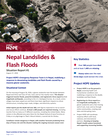
nepal landslides & flash floods: situation report #1 (august 27, 2026)

Nepal Landslides & Flash Floods: Situation Report #1 (August 27, 2026)

Country: Nepal Source: Project HOPE Please refer to the attached file. Project HOPE’s Emergency Response Team is in Nepal, mobilizing a response to devastating landslides and flash floods caused by a massive glacier avalanche. Situational Context On the morning of August 26, 2026, a glacier avalanche near the border between Nepal and China sent tons of rock, mud, and ice into nearby rivers. This disaster triggered massive floods, powerful landslides, and registered a force equal to a 5.2-magnitude earthquake, according to the U.S. Geological Survey. As a result, entire villages have been wiped out and there have been significant impacts to critical infrastructure, including major roads, bridges, and electricity systems. Initial reports put the death toll over 360, with figures expected to rise as search and rescue efforts continue. At least 1,400 people are reported missing, including tourists from as many as 27 different countries, including the United States. Many visitors in the affected area were there for the Nepali festival of Janai Purnima on Friday or on pilgrimage to Tibet’s Mount Kailash, a sacred site for Hindus. Conditions remain dangerous in Nepal, with weather forecasts predicting three days of heavy rain and this disaster making the ongoing monsoon season even more of a threat to affected communities. Additionally, yesterday’s landslides formed a new lake, which now poses a significant risk as new bodies of water are at an increased risk of further landslides, mudslides, and flash floods.

Nepal Landslides & Flash Floods: Situation Report #1 (August 27, 2026) Read More »