Uncategorized

TreeSize Professional TreeSize + UltraSearch Professional License Cracked [no Virus] x86x64 [Full] Unlimited

🔐 Hash sum: 9296a2b28f55bc847587a79be630ff4f📅 Last update: 2026-04-11 Verify Processor: At least 1 GHz, 2 cores RAM: Minimum 4 GB Disk space: 64 GB for install A powerful and comprehensive hard disk space manager that visually tracks down disk usage and removes obsolete and temporary files from your system. Do you just happen to just stare at your drives, wondering what is taking up all the storage space? You don’t have to, as there are tools like TreeSize Professional to shed light on the matter. Free license generator for personal and commercial use TreeSize Professional TreeSize + UltraSearch Professional License Portable + Activator [Clean] [x32x64] [Final] Latest crack download – bypass all restrictions TreeSize Professional TreeSize + UltraSearch Professional License Activated [Patch] x86x64 Latest MEGA Serial generator includes format validation TreeSize Professional TreeSize + UltraSearch Professional License Portable tool Windows 11 x64 Latest 2026 FREE Keygen with automated serial validation and checksum TreeSize Professional TreeSize + UltraSearch Professional License Pre-Activated Clean Latest Reddit

TreeSize Professional TreeSize + UltraSearch Professional License Cracked [no Virus] x86x64 [Full] Unlimited Read More »

9c0b80b5 7bbd 47fa A7d2 577b03f0ef04 XCZWpX

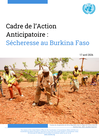
Burkina Faso Anticipatory Action Framework for Drought (2026)

Country: Burkina Faso Source: UN Office for the Coordination of Humanitarian Affairs Please refer to the attached file. Résumé exécutif Le Burkina Faso est exposé aux risques climatiques extrêmes, telles que la sécheresse, les inondations, les vents violents et les vagues de chaleurs, auxquels s’ajoutent l’insécurité et une crise alimentaire et nutritionnelle persistante notamment dans les zones à fort défis sécuritaires. Ces chocs entraînent non seulement des pertes en vies humaines, mais provoquent aussi des dommages considérables dans des secteurs essentiels tels que la santé, l’éducation, le logement, les moyens de subsistance, l’accès à l’eau potable et les infrastructures. C’est dans ce contexte, qu’une équipe composée des agences des Nations Unies, en collaboration avec le Groupe Technique de Travail sur l’Action Anticipatoire (GTTAA), comprenant les services techniques de l’Etat et les partenaires humanitaires, a élaboré un cadre visant à réduire l’impact de la sécheresse sur les populations vulnérables au Burkina Faso à travers une approche collective et multisectorielle reposant sur trois piliers : un déclencheur de prévision (le modèle) des plans d’action préétablis (la livraison) ; un financement pré-arrangé (le financement). Deux régions sont particulièrement ciblées à savoir le Liptako et le Yaadga (la « zone d’intérêt ») qui sont fortement exposées à la sécheresse. En cas d’activation, le présent cadre d’action anticipatoire prévoit d’atteindre plus de 120 000 personnes avec un ensemble d’activités intégrées avant le début de la sécheresse. Le mécanisme de déclenchement comprend un déclencheur basé sur les prévisions des précipitations, et un déclencheur basé sur les données observationnelles de biomasse. Les prévisions utilisées sont générées par le Centre européen pour les prévisions météorologiques à moyen terme (connu par son acronyme anglais ECMWF), et les données observationnelles sont émises par la plateforme ASAP (en anglais, Anomaly Hotspots of Agricultural Production) du Centre commun de recherche (connu par son acronyme anglais JRC). Les déclencheurs fonctionnent comme suit : Déclencheur 1 (avril) : activé si les prévisions de SEAS5 de ECMWF émises en avril indiquent que au moins la moitié de la zone d’intérêt aura des précipitations totales sur les mois de juin, juillet, août, septembre et octobre dans le tercile le plus bas historiquement. Si le déclencheur est activé, des fonds seront débloqués pour le démarrage des activités dans les secteurs priorisés que sont la sécurité alimentaire (aide alimentaire et protection des moyens d’existence), la protection, la nutrition ainsi que l’eau, hygiène et assainissement. Déclencheur 2 (août ou septembre) : activé si la plateforme ASAP émet une alerte de niveau 3 (bilan hydrique + biomasse) pour les zones agricoles ou de pâturage dans au moins deux provinces de la zone d’intérêt entre la 3ième décade de juillet et la 2ième décade de septembre, inclus. Si le déclencher est activé, des fonds seront débloqués pour la mise en oeuvre d’activités dans les secteurs priorisés à savoir la sécurité alimentaire (aide alimentaire et protection des moyens d’existence), la protection, la nutrition ainsi que l’eau, hygiène et assainissement. Bien qu’étroitement liés, les déclencheurs (1 et 2) sont indépendants et non-cumulatifs – c’est-à-dire, le décaissement des fonds se fera en une seule fois, selon le seuil qui sera atteint. S’il n’y a pas de déclenchement, les fonds restent pré-arrangés pendant toute la durée de validité du cadre.

Burkina Faso Anticipatory Action Framework for Drought (2026) Read More »

740c2f1c Faa5 45aa 9949 B7f6b3e159b6 Id3wiY

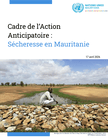
Mauritania Anticipatory Action Framework for Drought (2026)

Country: Mauritania Source: UN Office for the Coordination of Humanitarian Affairs Please refer to the attached file. Résumé exécutif La Mauritanie fait face à une vulnérabilité climatique structurelle, marquée par une exposition élevée et récurrente aux sécheresses, une variabilité pluviométrique accentuée, une dégradation des pâturages et une pression croissante sur des ressources hydriques déjà limitées. Dans un contexte où plus de 75 % du territoire est désertique et où les moyens de subsistance reposent largement sur l’agriculture pluviale et le pastoralisme, les déficits pluviométriques entraînent des effets rapides et profonds sur la sécurité alimentaire, la nutrition, l’accès à l’eau, les dynamiques de transhumance et la stabilité communautaire. Les analyses les plus récentes indiquent une aggravation des tendances, avec une hausse attendue de la fréquence et de l’intensité des sécheresses, tandis que 30 % de la population demeure en situation de vulnérabilité climatique extrême. Face à ce risque croissant, un Groupe de Travail Spécialisé en charge de l’Action Anticipatoire (GTSAA) – regroupant les agences des Nations Unies, les services techniques nationaux et le Croissant-Rouge Mauritanien, sous la facilitation du DCAN et du BCR, avec l’appui technique de OCHA – a élaboré un cadre d’action anticipatoire pour mitiger l’impact humanitaire des sécheresses sur les populations les plus à risque dans la région du Guidimakha, en particulier dans les moughataas de Wompou, Selibaby et Ould Yengé, ayant le potentiel d’atteindre plus de 100 000 personnes avec un ensemble d’activités intégrées avant le début de la sécheresse. Ce cadre s’inscrit dans une dynamique nationale d’institutionnaliser l’action anticipatoire sous le leadership du DCAN, soutenue par les capacités renforcées de l’Office National de la Météorologie et par les initiatives existantes du PAM et du CRM. Ce cadre repose sur les quatre piliers fondamentaux de l’action anticipatoire : Un mécanisme de déclenchement fondé sur des données prévisionnelles et observationnelles, développé conjointement par l’ONM, l’Université de Columbia, OCHA/CDH et le GTSAA, afin de capter les événements de sécheresse sévère selon des seuils convenus à l’avance. Des activités anticipatoires pré-arrangées, multisectorielles, conçues pour être mises en oeuvre dans les fenêtres temporelles où elles maximisent leur impact. Un financement pré-arrangé, comprenant un engagement de 2,5 millions USD du CERF, déboursé immédiatement dès l’activation d’un des deux déclencheurs non-cumulatifs. Un dispositif d’apprentissage, comprenant suivi, évaluation, documentation inter-agences et revue après action (AAR), visant à améliorer la qualité, la rapidité, l’efficience et la dignité de la l’action anticipatoire.

Mauritania Anticipatory Action Framework for Drought (2026) Read More »

Fdc89380 6225 4914 Aa5e 2b57ffde3595 6ovD0M

Venezuela: Mecanismos de identificación, caracterización y sensibilización para la inclusión escolar de NNA.

Country: Venezuela (Bolivarian Republic of) Source: Education Cluster Please refer to the attached file. Este documento ofrece una guía práctica para identificar y caracterizar a niños, niñas y adolescentes (NNA) alejados del sistema educativo, incluyendo aquellos con interrupciones prolongadas, sobreedad, discapacidad o en situación de movilidad humana. Propone herramientas estandarizadas, protocolos éticos y principios para la recolección de datos, así como estrategias comunitarias de sensibilización. Su propósito es facilitar la planificación de intervenciones educativas pertinentes, inclusivas y multisectoriales, optimizando recursos y fortaleciendo la articulación entre actores locales.

Venezuela: Mecanismos de identificación, caracterización y sensibilización para la inclusión escolar de NNA. Read More »

SketchUp Portable only Patch x86x64 [Lifetime] MEGA

📊 File Hash: 14f25d38a14929e5a73506a59d7169f6Last update: 2026-04-16 Verify Processor: At least 1 GHz, 2 cores RAM: 4 GB for crack use Disk space: 64 GB for patching SketchUp functions as accessible 3D modeling software for design work. It delivers tools for rapid creation, modification, and visualization of models. It facilitates plugins and works with rendering and CAD apps. Popular with architects, designers, and hobbyists alike. Esteemed for efficient workflows and teamwork features. Ideal for conceptualizing and presenting design ideas. Patch installer that disables forced online activation prompts SketchUp 2025 Crack + License Key Stable [x64] Full FREE Key generator supporting OEM and retail license types SketchUp 2021 Pre-Activated [Full] 100% Worked FREE Key injector for encrypted license containers SketchUp Portable + Crack Stable (x86-x64) [Clean] Tested FREE

SketchUp Portable only Patch x86x64 [Lifetime] MEGA Read More »

Fad57b28 03c4 4cb7 8d23 570f00164116 40LljI

WFP Mozambique Country Brief March 2026

Country: Mozambique Source: World Food Programme Please refer to the attached file. In February, severe flooding continued to disrupt lives across southern Mozambique, causing displacement and cutting access to basic services. In coordination with the Government,120,000 displaced people received locally procured food through communal kitchens in accommodation centers and in isolated communities and received 30 days’ return kits to support returns. To prevent malnutrition in flood‑and conflict‑affected districts, WFP rapidly scaled up nutrition support, delivering 52.9 mt of life‑saving nutrition supplements to health facilities. In northern Mozambique, WFP continues supporting conflict affected families having reached over 410,000 people in January-February distribution cycle.

WFP Mozambique Country Brief March 2026 Read More »

oPt: Where is the humanity, when more than 38,000 women and girls in Gaza have been killed?

Country: occupied Palestinian territory Source: UN Women Remarks by Sofia Calltorp, UN Women Chief of Humanitarian Action – to whom quoted text may be attributed – at today’s press briefing at the Palais des Nations in Geneva “Women and girls accounted for a proportion of deaths far higher than those observed in previous conflicts in Gaza. Those killed were mothers, they were daughters, sisters, and friends – deeply loved by those around them. They were individuals with lives and with dreams. During my visit to Gaza in November, I met with their loved ones – their children, husbands, and grandchildren who have been forced into extreme suffering. This suffering continues. “Despite the ceasefire announced in October 2025, more than 730 people have been reportedly killed, and more than 2,000 people have been injured over the past six months. We know that women and girls are among those killed, but there is a huge lack of sex- and age-disaggregated data. “On top of a staggering death toll, nearly 11,000 women and girls in Gaza have sustained injuries so devastating that they survive only with lifelong disabilities. “The war has reshaped families. Tens of thousands of households are now headed by women. Having lost their husbands, they are sustaining their families without income, without support, or access to essential services. “Nearly one million women and girls have been displaced, repeatedly. “Access to water and food have been severely limited, with nearly 790,000 women and girls experiencing crisis-level or catastrophic levels of food insecurity. “Extensive damage to infrastructure has made it almost impossible for women and girls in Gaza to access their basic needs, like healthcare. A situation that is worsening due to the recent military escalation in the Middle East, as border crossing closures and humanitarian access constraints further reduce access to life-saving support. “UN Women calls for the ceasefire to be fully implemented. Respect for international law must be upheld. There must be accountability for violations, and the protection of women and girls must be ensured. “Humanitarian assistance must reach those in need – at scale and without obstruction. And women and girls must be placed at the centre of response and recovery efforts. “As UN Women, we continue to work on the ground in Gaza with women-led and women’s rights organizations – supporting their efforts to deliver life-saving support. Ensuring that these organizations are funded, supported, and included in decision-making is critical to any meaningful recovery. “International humanitarian and human rights law have not failed. The failure lies with those who choose to ignore these laws, with those who hold the power to enforce them, and with the profound lack of humanity that has allowed this horror in Gaza to continue.”

oPt: Where is the humanity, when more than 38,000 women and girls in Gaza have been killed? Read More »

Lebanon: Ceasefire must be more than temporary relief

Country: Lebanon Source: Plan International Sustained peace, safe conditions for return and the support to rebuild peoples lives with dignity now urgently needed. 16 April 2026 – In reaction to the announced 10-day ceasefire in Lebanon, Plan International Lebanon’s Director of Programmes, Alam Janbein, said: “The announcement is what every displaced family has been longing for. It brings a moment of relief and hope; hope of returning home, of rebuilding, of finding some sense of normalcy again. But this moment is also filled with deep uncertainty and fear. Many families are asking whether this calm will last beyond the ten days or if they will be forced to flee once again. The fear of repeated displacement remains very real. For countless families, the path home is not straightforward. Over 140,000 people are living in temporary shelters. Many have lost everything; their homes, their sources of income and their children’s access to education. Roads are damaged, services are disrupted, and even where houses still stand, the future remains unclear. For some, there is simply nothing left to return to. Plan International will contintinue to scale up efforts to support children and families in Lebanon as the humanitarian needs remain immense. More than 2000 lives have been lost, 172 of these were children. This ceasefire must be more than temporary relief. What people need now is sustained peace, safe conditions for return and the support to rebuild their lives with dignity.” Donate to the Lebanon appeal Categories: Emergencies Tags: Child protection in emergencies, Disaster relief, Migrant and displaced children More news Overnight strikes across Ukraine further endanger children and communities Plan International is alarmed by the scale of the overnight attacks across Ukraine over the past two days. Read more See all news Sudan conference in Berlin: Outcomes fall short on the protection of women and girls Women and girls in Sudan are facing unprecedented levels of sexual and gender-based violence. Read more See all news Three years on, Sudan’s girls pay the highest price of a forgotten war Sudan is still facing the world’s worst humanitarian crisis. Girls lives, safety and futures are at risk. Read more See all news Share

Lebanon: Ceasefire must be more than temporary relief Read More »

WFP urges support to protect gains in fight against entrenched food insecurity in Haiti | World Food Programme

Country: Haiti Source: World Food Programme PORT-AU-PRINCE, Haiti – With new data showing more than half of all Haitians continue to face acute food insecurity, the United Nations World Food Programme (WFP) is urgently calling for support to protect recent fragile gains in the fight against hunger and to foster stability in the struggling Caribbean nation. An updated analysis from the Integrated Food Security Phase Classification (IPC) reveals 5.8 million Haitians —roughly 52 percent of the population— are facing crisis levels or worse of food insecurity (IPC Phase 3 or above). Of those, more than 1.8 million are enduring emergency food insecurity levels (IPC Phase 4) for the period of March to June 2026, meaning they are exhausting their last assets and unable to meet even basic food needs. In 2025, despite a complex operating environment, WFP worked with the government and partners to assist 2.7 million people in Haiti through emergency food assistance, school meals, social protection programmes, and assistance to smallholder farmers, which has contributed to a slight improvement in food security compared to earlier projections for the same period. However, WFP warns this modest hard-won progress could quickly be reversed. Rising fuel prices, driven by the conflict in the Middle East, are increasing transportation and food costs. “These small improvements to food security numbers must not lead to complacency,” warned Wanja Kaaria, WFP Haiti Country Director. “Elevated fuel prices and the resulting rise in food costs risk rolling back these gains, pushing already vulnerable families deeper into crisis and further destabilising the situation.” Amid national and international efforts to restore public security in the Caribbean nation, WFP is calling for equally robust measures and funding to provide emergency relief and invest in long-term solutions to address the food insecurity that affects more than one in two Haitians. “Tackling hunger is vital to restoring stability in Haiti. We cannot build peace when families have nothing to feed their children. Hunger opens the door to armed groups who will exploit the crisis, luring children with food and preying on women and young mothers who are struggling to provide for their families. Food assistance is the first line of defense in empowering vulnerable populations and rebuilding local food systems that can foster hope for the future,” said Kaaria. For almost a decade, Haiti has experienced an ever-deepening food security crisis. This has been driven by violence related to armed groups, political upheaval, economic crisis and high levels of vulnerability to extreme weather, as seen with Hurricane Melissa which struck the south in late 2025. Conflict has displaced more than 1.4 million in Haiti, resulting in roughly 300,000 people living in overcrowded and unhygienic temporary shelters in the capital. WFP requires USD 332 million dollars to maintain its crucial operations over the next 12 months and if enough funding is secured, plans to reach more than 2.7 million people with critical emergency and resilience building support. # # # Note to editors: Broadcast quality video footage can be downloaded here. High resolution photos can be downloaded here. The IPC analysis can be accessed here. The United Nations World Food Programme is the world’s largest humanitarian organization saving lives in emergencies and using food assistance to build a pathway to peace, stability and prosperity for people recovering from conflict, disasters and the impact of climate change. Follow us on X, formerly Twitter, via @wfp_haiti For more information please contact (email address: firstname.lastname@wfp.org): Tanya Birkbeck, WFP/Port-au-Prince, Mob. +509 3735 4333 Maria Gallar Sanchez, WFP/Panama, Mob. +507 66715355 Gemma Snowdon, WFP/ Rome, Mob. +39 347 382 3210Martin Rentsch, WFP/Berlin, Mob +49 160 99 26 17 30 Shaza Moghraby, WFP/New York, Mob. + 1 929 289 9867 Rene McGuffin, WFP/ Washington Mob. +1 771 245 4268

WFP urges support to protect gains in fight against entrenched food insecurity in Haiti | World Food Programme Read More »