
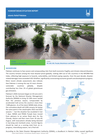

Please refer to the attached file.
Location KP, AJK, GB, Punjab, Balochistan and Sindh
BACKGROUND
Pakistan continues to face severe and compounding risks from both economic fragility and climate-induced disasters. The country remains among the most disaster-prone globally, ranking 18th out of 191 countries in the INFORM Risk Index, reflecting high exposure to hazards, vulnerability, and limited coping capacity. Over the past decade, disasterrelated damages have exceeded USD 18 billion, significantly constraining economic growth and development progress. More recent climate assessments also indicate that Pakistan is among the top 10 most climatevulnerable countries globally, despite contributing less than 1% of global greenhouse gas emissions.
Pakistan’s 2026 monsoon began on 26 June and is forecast by the National Disaster Management Authority (NDMA) to bring 22–26% more rainfall than the previous season, compounded by accelerated melt across the country’s more than 7,000 glaciers. As of the latest NDMA daily sitrep, the cumulative death toll (109) remains far below the same point in the catastrophic 2022 and 2025 seasons — but the situation has escalated in last 7 days: NDMA and PDMA Punjab have moved from advisory to an active flood alert for the Chenab, Jhelum and Ravi rivers from 29 July–05 August, with evacuations already being directed in low-lying and riverbank areas. Current figures should be read as a running total from an inprogress, intensifying season, not a final toll.
According to the State Disaster Management Authority (SDMA), a cloudburst in Neelum Valley caused significant damage to infrastructure, including houses, shops, government schools, and bridges. Losses of livestock were also reported in the affected areas. The Azad Jammu and Kashmir State Disaster Management Authority (AJK SDMA) is closely monitoring the situation and has initiated coordination, response, and relief efforts in collaboration with relevant departments and local authorities to support affected communities.
As of 28 July 2026, a total of 109 deaths and 360 injuries have been reported nationwide. The majority of casualties resulted from house collapses and flash floods triggered by heavy rainfall. Additionally, 796 houses have been damaged, either fully or partially, while 379 livestock have perished. These numbers are expected to increase as ongoing rainfall and forecasted precipitation continue to impact affected areas. More Monsoon Rains predicted in the country from 29th July to 05th August.